15. Change Management Components
The change management process includes the following components:
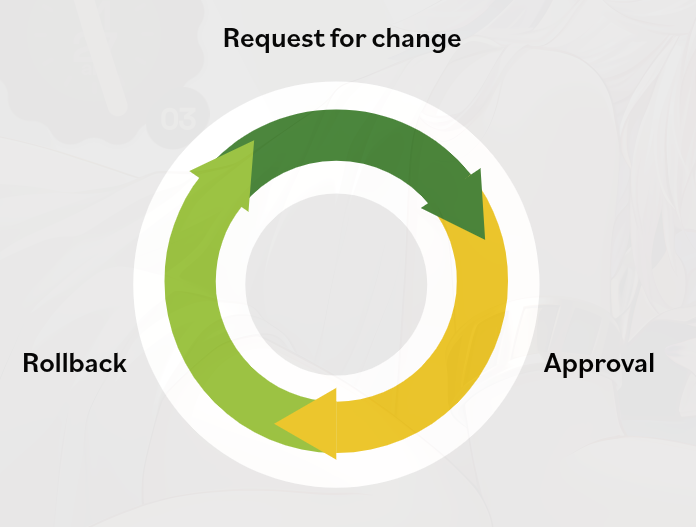
Documentation
- Major change management practices begin with a request for change (RFC).
- The RFC moves through various development and test stages until the change is released to end users.
- From first to last, each step is subject to formalized management and decision-making.
- Each step produces accounting or log entries to document its results.
Approval
These processes typically include:
- Evaluating the RFCs for completeness
- Assignment to the proper change authorization process based on risk and organizational practices
- Stakeholder reviews
- Resource identification and allocation
- Appropriate approvals or rejections
- Documentation of approval or rejection
Rollback
- Depending on the nature of the change, different activities may be needed.
- These generally include:
- Scheduling the change
- Testing the change
- Verifying the rollback procedures
- Implementing the change
- Evaluating the change for proper and effective operation
- Documenting the change in the production environment
- Rollback authority is generally defined in the rollback plan.
- Rollback may be immediate or scheduled as a subsequent change if monitoring suggests inadequate performance.